A hundred years ago, you didn't need a radar screen to know a plane was coming. You just needed good ears and a big enough dish to catch the sound.
That's not a metaphor. Countries really did build giant concrete dishes along their coastlines, pointed at the sky, so a soldier sitting in front of one could hear an engine long before anyone could see the plane it belonged to. This sounds like ancient history, but the same basic idea, listen instead of look, is back in active use today, this time against drones.
Britain's Listening Ears
Between the World Wars, Britain built a string of these structures along its coast. They're usually called acoustic mirrors, though most people just call them listening ears. Each one is a curved concrete wall or dish, shaped to catch faint engine sounds from miles away and focus them toward a microphone or a soldier with a stethoscope.
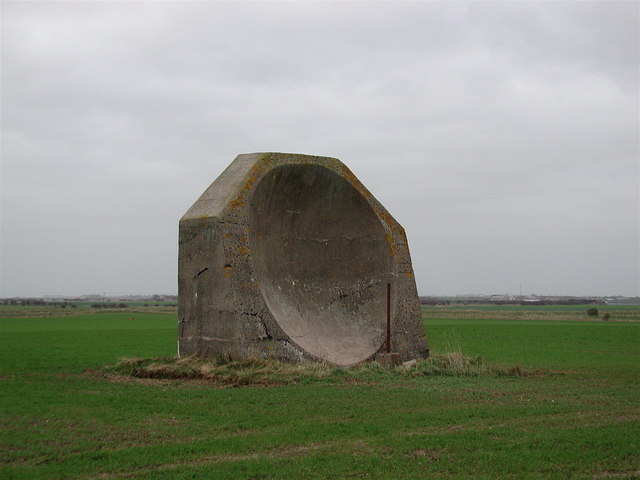
The biggest of these mirrors could pick up an aircraft engine from around 15 miles away, giving defenders roughly 15 minutes of warning before a raid arrived. That was a real advantage in an era with no other way to see an enemy plane coming.
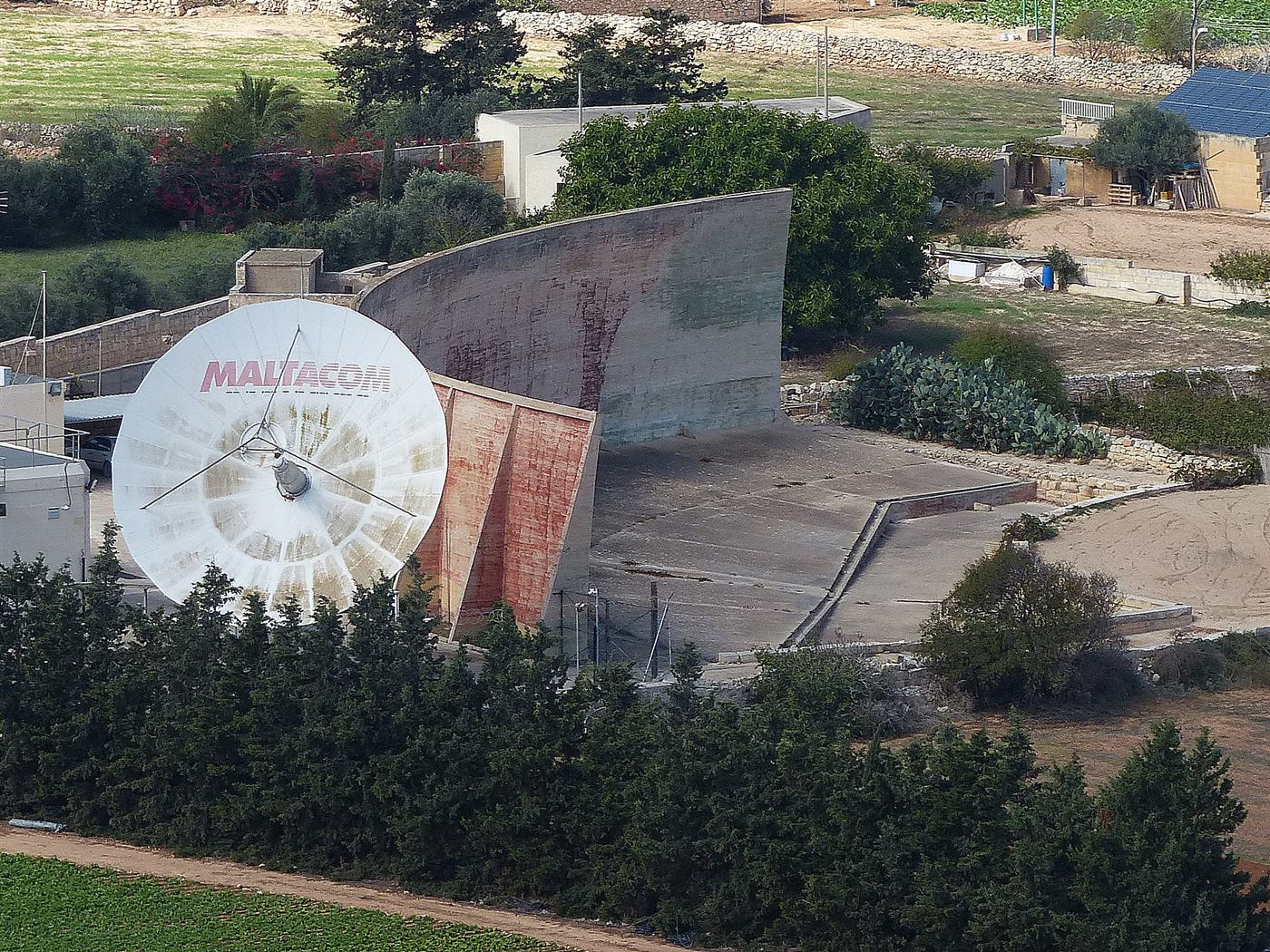
The largest example of all wasn't even in Britain. On the island of Malta, engineers built a mirror nicknamed il-Widna, Maltese for "the ear." Finished in 1935, it's a curved concrete wall 200 feet long, roughly the length of two tennis courts laid end to end. In testing, il-Widna picked up an aircraft from about 25 miles out, which is close to 40 kilometers. During the Second World War, it gave Malta's defenders several precious minutes of warning against Italian and German bombers.
These devices were eventually replaced by radar, which was faster and worked in any weather. But the underlying idea, that a flying object gives away its position through sound whether it wants to or not, never stopped being useful. It just went quiet for a few decades.
The Same Idea, Now Fighting Drones
Fast forward to today's war in Ukraine, and sound is back on the front line.
Small drones are hard for radar to catch. They fly low, they're made of plastic and foam, and many modern designs don't transmit any radio signal at all, especially drones guided by a thin fibre-optic cable instead of a radio link. Radar and radio jammers, the tools militaries have relied on for decades, simply can't see or hear these threats.
But every drone still has a propeller, and a propeller spinning through the air makes noise. Ukraine has leaned into that fact hard. Reports describe a national network of acoustic sensors, thousands of low-cost microphones and AI listening posts scattered across the country, built to catch that telltale hum. In one engagement described by a senior US Air Force commander, the network reportedly helped Ukrainian forces detect 84 incoming drones and shoot down all but four of them.
More recently, a Ukrainian company called ZVOOK introduced a purpose-built tactical sensor, the ZVOOK NW0, aimed specifically at drones that fly on fibre-optic control and can't be picked up by traditional radio-monitoring gear. It's a small, rugged, weatherproof unit with a declared detection range of roughly 150 to 450 meters, priced at around $500 each, cheap enough to place in large numbers along a front line.
Beyond Drones: Listening for Artillery Too
The same principle, sound gives away a position, works for more than just aircraft and drones.
In 2025, a Ukrainian firm called Vidar Systems unveiled acoustic sensor kits built to locate enemy artillery and mortars by the sound of their firing, not their flight. A single kit of five sensors, using triangulation and AI, can cover a 10-kilometer stretch of front line and pinpoint targets up to 25 kilometers away. The whole kit weighs about 25 kilograms and can be set up by one or two people, no radar truck or specialist crew required.
It's a striking echo of 1935. Different war, different threat, but the same basic principle. Listen first, and you'll know where to look.
What Hasn't Changed
The physics behind all of this is exactly what it was a century ago. Anything that moves through air fast enough to matter, a bomber, a drone, an artillery shell, disturbs that air in a way a microphone can pick up. No amount of stealth design or radio silence changes that.
What has changed is what we can do with the sound once we hear it. A 1930s listening post needed a trained soldier and a stethoscope. Today's systems use AI trained on huge sound libraries to instantly tell a delivery drone from an attack drone, or a friendly aircraft from a hostile one, and to do it automatically, day or night.
At DroSonic, we are working on that same problem, detecting drones by sound alone, with no radio emissions and no dependence on radar. The tools have changed enormously since the 1930s. The reason sound still matters hasn't changed at all.
Sources
- Wikipedia, "Acoustic mirror"
- Wikipedia, "Il-Widna"
- CNN, "The 'war tubas' we used to spot warplanes before radar"
- The War Zone, "Ukraine's Acoustic Drone Detection Network Eyed By U.S. As Low-Cost Air Defense Option"
- UAS Vision, "Ukraine Develops Acoustic Detector for FPV Drones"
- TechUkraine, "Ukraine Unveils Revolutionary Acoustic Sensors for Artillery Detection"